Παρασκευή 18 Μαΐου 2012
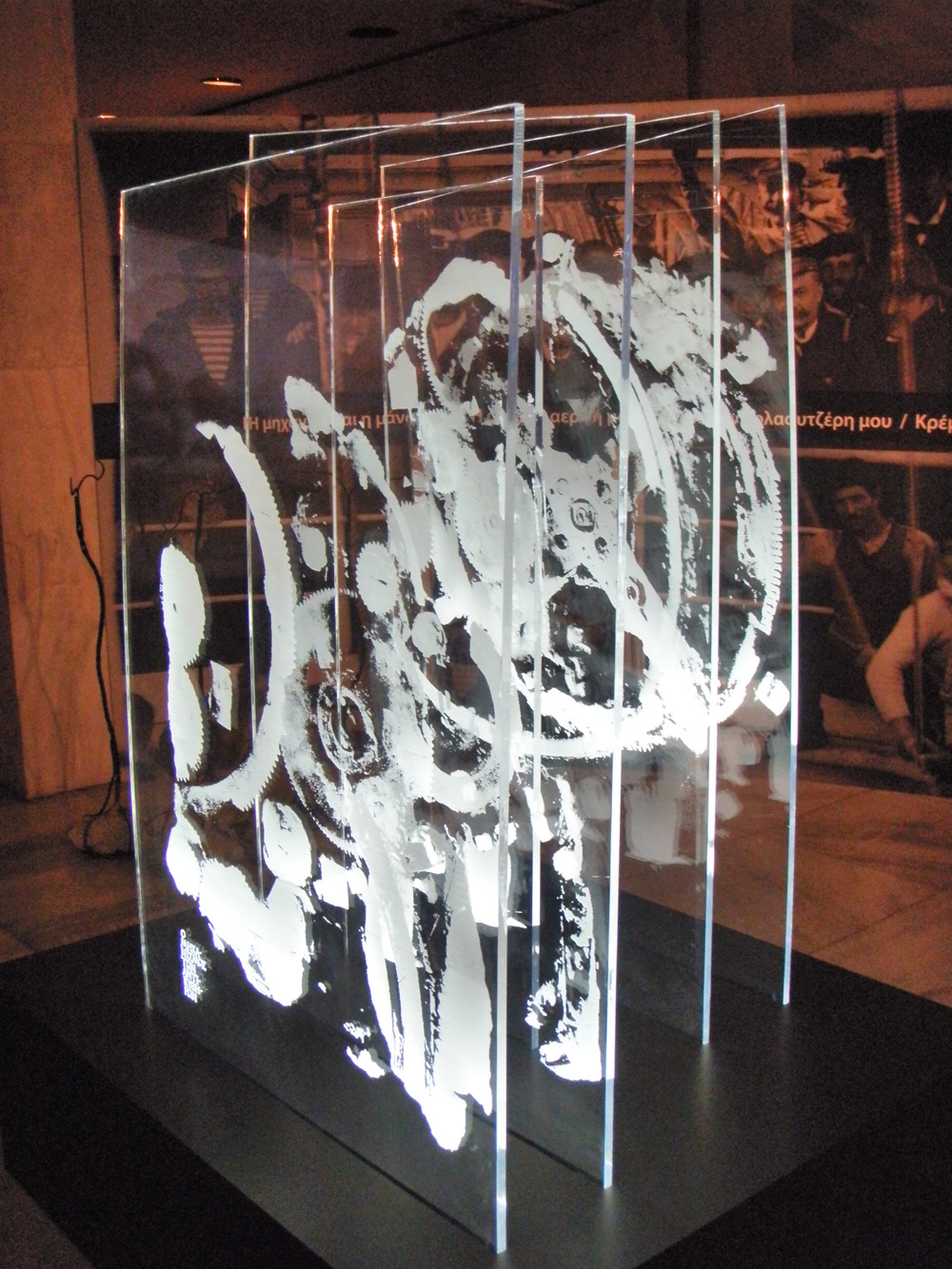
Ο Μηχανισμός των Αντικυθήρων
Δευτέρα 2 Απριλίου 2012
«Το Ναυάγιο των Αντικυθήρων»Το Πλοίο, οι Θησαυροί, ο Μηχανισμός
6 Απριλίου 2012 – 28 Απριλίου 2013
Το Εθνικό Αρχαιολογικό Μουσείο,
συνεχίζει με συνέπεια την υλοποίηση των στόχων του, ένας από τους οποίους
είναι και η προσφορά μιας τουλάχιστον μεγάλης αρχαιολογικής περιοδικής
έκθεσης κάθε χρόνο.
Η περιοδική έκθεση για το 2012 είναι αφιερωμένη στο Ναυάγιο των
Αντικυθήρων. Για πρώτη φορά θα παρουσιαστεί το σύνολο σχεδόν των αρχαιοτήτων, οι
οποίες ανασύρθηκαν από το χώρο του περίφημου ‘Ναυαγίου. Το ναυάγιο
εντόπισαν σφουγγαράδες από τη Σύμη και η μερική ανέλκυσή του συνιστά την πρώτη
μεγάλης έκτασης ενάλια έρευνα παγκοσμίως.
Κατά την πρώτη φάση (1900-1901) την επιχείρηση ανέλαβαν οι Σύμιοι σφουγγαράδες με τη συνδρομή πλοίων του
Βασιλικού Ναυτικού. Η δεύτερη φάση (1976) πραγματοποιήθηκε από την Αρχαιολογική
Υπηρεσία με τη βοήθεια του ωκεανογραφικού πλοίου του J.Y. Cousteau “Καλυψώ”.
Η έκθεση συνδιοργανώνεται από το Εθνικό
Αρχαιολογικό Μουσείο, το Εθνικό Ίδρυμα Ερευνών, την Ομάδα
Μελέτης του Μηχανισμού των Αντικυθήρων και την Εταιρεία Μελέτης
Αρχαίας Ελληνικής Τεχνολογίας (Ε.Μ.Α.Ε.Τ.). Το γενικό συντονισμό της
έκθεσης έχει ο Διευθυντής του Εθνικού Αρχαιολογικού Μουσείου Δρ Νικόλαος
Καλτσάς.
Χορηγοί της Έκθεσης:Μέγας χορηγός της έκθεσης και του επιστημονικού
καταλόγου της είναι η Ελβετική ωρολογοποιία Hublot.
Χορηγοί: ο όμιλος ΟΤΕ – Cosmote και η Alpha Bank.
Υποστηρικτές της έκθεσης είναι: Η ΔΕΗ, η Πετρογκάζ, η
εταιρία φωτιστικών Βασιλείου και ο Διεθνής Αερολιμένας Αθηνών.
Υποστηρικτές για την προβολή της έκθεσης: Οι εταιρίες
Attica Group Blue Star Superfast & Ferries, η GoldenStarFerries
καθώς και ο Δήμος Ταύρου-Μοσχάτου.
Χορηγοί επικοινωνίας: ΕΡΤ ΑΕ και MEGA.
Η έκθεση συνοδεύεται από ειδικό κατάλογο-μονογραφία για το θέμα,
στον οποίο διακεκριμένοι Έλληνες αρχαιολόγοι και επιστήμονες των φυσικών
επιστημών παρουσιάζουν κείμενα, τόσο των ενοτήτων της έκθεσης όσο και
επιμέρους θεμάτων σχετικών με το ναυάγιο. Ο κατάλογος περιλαμβάνει επίσης,
τις φωτογραφίες και τα λήμματα των αντικειμένων.
Εγκαίνια: 5 Απριλίου 2012
Tηλ. Επικοινωνίας: 210 8217724, 210 8271717
Παρασκευή 17 Φεβρουαρίου 2012
Μηχανισμος Αντικυθηρων

Πραγματοποιήθηκε η Έκθεση του Μηχανισμού των
Αντικυθήρων
13
Φεβρουαρίου 2012
Πρωτοφανής η προσέλευση μαθητών και κοινού
Πραγματοποιήθηκε
στο Πνευματικό Κέντρο του Δήμου Λευκάδας, στις 10 και 11 Φεβρουαρίου, η έκθεση
του Μηχανισμού που βρέθηκε σε αρχαίο ναυάγιο στα Αντικύθηρα το 1903, και
θεωρείται ο αρχαιότερος Υπολογιστής.
Η
πρωτοβουλία του Επαγγελματικού Λυκείου (ΕΠΑΛ) και της Επαγγελματικής Σχολής
(ΕΠΑΣ) Λευκάδας έδωσε την δυνατότητα σε μεγάλο πλήθος μαθητών όλων των Σχολείων
Α’θμιας και Β’θμιας Εκπαίδευσης να γνωρίσουν ένα θαυμαστό επίτευγμα της
Τεχνολογίας των αρχαίων Ελλήνων.
Μέσα σε ένα καλά οργανωμένο 6ωρο πρωινό Παρασκευής
περισσότεροι από 700 μαθητές δεκαεπτά σχολείων της Λευκάδας, με θαυμαστή
συνέπεια στο πρόγραμμα επισκέψεως, άψογη παρουσία και ενδιαφέρον, είδαν τον
περίφημο Μηχανισμό και άκουσαν για την ανάπτυξη των Μαθηματικών, της
Αστρονομίας και της Μηχανικής της εποχής του Αρχιμήδη και του Ιππάρχου.
Πήραν ένα
μάθημα που θα τους μείνει αλησμόνητο. Εφοδιάστηκαν με κίνητρα και παραδείγματα
για την δική τους μελλοντική προσφορά στην πρόοδο της πατρίδας και της ανθρωπότητας.
Η Έκθεση περιελάμβανε την επίδειξη του ομοιώματος του
Μηχανισμού (κατασκευής Διον. Κριάρη) σε μεγάλη αίθουσα μαζί με είκοσι μεγάλες
εικόνες με το ιστορικό των ερευνητικών προσπαθειών αναγνωρίσεως των συστατικών
στοιχείων και της λειτουργίας του, που επιμελήθηκε και επεξηγούσε κατανοητά ο
Καθηγητής Αστροφυσικής του Πανεπιστημίου Αθηνών κ. Ξενοφών Μουσάς.
Σε δύο
μικρότερες αίθουσες οι μαθητές έβλεπαν τρισδιάστατες διαδραστικές απεικονίσεις
του Μηχανισμού σε τέσσερεις Η/Υ, που χειρίζονταν οι μαθητές της Πληροφορικής
του ΕΠΑΛ με την υπεύθυνη εκπαιδευτικό τους κα Αθηνά Γκρίτζα.
Στην αίθουσα διαλέξεων προβαλλόταν ολιγόλεπτη ταινία
παρουσιάσεως του Μηχανισμού με σχετικό σχολιασμό του διευθυντή του ΕΠΑΛ κ.
Αναστασίου Στάμου.
Στον μεγάλο
προθάλαμο του Πνευματικού Κέντρου υπήρχε έκθεση Έργων των μαθητών του ΕΠΑΛ με
μηχανολογικές και ηλεκτρολογικές κατασκευές με την επιμέλεια του εκπαιδευτικού
τους κ. Ηλία Βλάχου, ενώ διανεμήθηκε πληροφοριακό φυλλάδιο με τις ειδικότητες
στις οποίες εκπαιδεύονται οι μαθητές της Τεχνικής-Επαγγελματικής Εκπαίδευσης
στην Λευκάδα.
Διανεμήθηκε
επίσης προς όλους φυλλάδιο για τον Μηχανισμό των Αντικυθήρων, όπου αναλύεται η
χρήση του που απεικονίζει σε μηχανική λειτουργία το Σύμπαν (Ήλιο, Σελήνη,
φάσεις και εκλείψεις, Πλανήτες και Αστερισμούς), με τα Ημερολόγια της εποχής
(1ος αιώνας π.Χ.) και δυνατότητα προσδιορισμού γεωγραφικού πλάτους και μήκους
ενός τόπου.
Την έκθεση
επισκέφθηκαν τα Δημοτικά σχολεία Λευκάδας, Νυδριού και Λυγιάς, τα Γυμνάσια
Λευκάδας, Καρυάς, Νυδριού, Βασιλικής και Μεγανησίου, όλα τα Γενικά Λύκεια, το
Επαγγελματικό Λύκειο και η Επαγγελματική Σχολή Λευκάδας.
Το βράδυ της Παρασκευής στην κατάμεστη αίθουσα
διαλέξεων έγινε η ομιλία του Καθηγητή κ. Ξενοφώντα Μουσά, με θέμα: «Ο
Μηχανισμός των Αντικυθήρων, το πρώτο μηχανικό Σύμπαν, ο αρχαιότερος
Υπολογιστής», την οποία παρακολούθησαν εκπρόσωπος της Ιεράς Μητροπόλεως, ο
Δήμαρχος Λευκάδας, Δημοτικοί Σύμβουλοι, ο Λιμενάρχης Λευκάδος, Δ/ντές και
Προϊστάμενοι Α’θμιας και Β’θμιας Εκπ/σης, Σχολικοί Σύμβουλοι, η Προϊστ. του
ΚΕΔΔΥ, Διευθυντές σχολείων, Καθηγητές και Δάσκαλοι, Γονείς και Μαθητές.
Το Σάββατο πρωί η Έκθεση ήταν ανοικτή στο κοινό, και
την επισκέφθηκε πλήθος κόσμου, καθώς και οι μαθητές του φροντιστηρίου
«Διάσταση». Για την επιτυχία της εκδήλωσης συνεργάστηκαν οι υπεύθυνοι του
Πνευματικού Κέντρου, ο Δήμος Λευκάδας, η Β’θμια Εκπαίδευση και το Πανεπιστήμιο
Αθηνών.
Ιδιαίτερη
μνεία οφείλεται στους μαθητές και Καθηγητές της Τεχνικής-Επαγγελματικής
εκπαίδευσης, που έδωσαν τον καλύτερο εαυτό τους παρουσιάζοντας τα εκθέματα, και
φυσικά στον φιλοξενούμενο Καθηγητή Αστροφυσικής κ. Ξενοφώντα Μουσά, ο οποίος
έκανε πραγματικό μάθημα σε χίλιους σχεδόν ανθρώπους μέσα σε μιάμιση μόλις
ημέρα.
Συγχαρητήρια
στους οργανωτές του ΕΠΑΛ Λευκάδας
Πέμπτη 7 Απριλίου 2011
Researcher cites ancient Minoan-era 'computer'
Τετάρτη 6 Απριλίου 2011
Ancient Greek calculating device continues to reveal secrets
Πέμπτη 26 Νοεμβρίου 2009
Ο Μηχανισμός Των Αντικυθήρων
Ο αρχαιότερος υπολογιστής στο ΑΠΘ
Κατασκεύασαν πιστό αντίγραφο του Mηχανισμού των Αντικυθήρων
Tου Θαναση Τσιγγανα
Οταν ο καθηγητής του Πανεπιστημίου του Γέιλ, Ντέρεκ ντε Σόλα Πράις, μετά 23 χρόνια ερευνών τοποθετούσε την πλάκα στο πρώτο αντίγραφο του Μηχανισμού των Αντικυθήρων, πίστευε ότι είχε φτάσει στη λύση του μεγάλου γρίφου για τα πρώτα γρανάζια που κατασκεύασαν και συνδύασαν οι αρχαίοι Ελληνες πριν από 20 αιώνες. Οι ραδιογραφίες του πυρηνικού φυσικού Χαρ. Καράκαλου, που βοήθησαν τον Αμερικανό καθηγητή, και
κυρίως τα συμπεράσματα του δρος Πρ, για το πώς συνδέονταν οι πολύπλοκοι άξονες με γρανάζια
του Μηχανισμού, «μας υποχρέωσαν να αλλάξουμε ριζικά τα όσα πιστεύαμε για την ελληνιστική
τεχνολογία».
Ομως, όπως σημείωνε ο Αυστραλός επιστήμονας Αλαν Μπρόμλεϊ, που επίσης ασχολήθηκε χρόνια με
το αρχαίο αντικείμενο κατασκευάζοντας κι αυτός ένα αντίγραφο, το μυστήριο συνεχίζεται. Σήμερα, διά
χειρός ομάδας του ΑΠΘ, η χώρα μας διαθέτει το πιο «κοντινό» αντίγραφο του αρχαιοελληνικού
τεχνολογικού θαύματος.
Το πολύπλοκο μηχάνημα, που ανασύρθηκε το 1900 από τον βυθό της θάλασσας των Αντικυθήρων
από Σύμιους σφουγγαράδες, κρατά ακόμη κρυμμένα κάποια μυστικά του, παρά τις υπερσύγχρονες
τομογραφίες που έγιναν στα τμήματά του στο Αρχαιολογικό Μουσείο Αθηνών, τις αλλεπάλληλες
επιστημονικές έρευνες και τις προσπάθειες διακεκριμένων επιστημόνων να κατασκευάσουν
πανομοιότυπους μηχανισμούς που να αποδίδουν αστρονομικά δεδομένα, όπως πιστεύεται ότι παρείχε
στον χρήστη του ο αρχαίος μηχανισμός που βρέθηκε στο ρωμαϊκό ναυάγιο του 80 π.Χ.
Σήμερα, περίπου 30 χρόνια μετά τις δημοσιεύσεις του Πράις, ο αριθμός των αξιόλογων αντιγράφων
του Μηχανισμού των Αντικυθήρων σε μουσεία και εκθέσεις όλου του κόσμου δεν ξεπερνούν τα 15.
Με σύγχρονα υλικά
«Αυτό ίσως να οφείλεται στο ότι έχει διασωθεί μόνο το 40% του αρχαίου μηχανισμού και λείπει το
υπόλοιπο. Ξέρουμε τι κάνει, αλλά σίγουρα μπορεί να κάνει και κάτι παραπάνω», τονίζει ο μαθηματικός
Διον. Κριάρης, που έχει κατασκευάσει με συγχρονα υλικά το 1/3 των αντιγράφων σε Αθήνα,
Θεσσαλονίκη και Νέα Υόρκη.
Σύμφωνα με την επικρατούσα επιστημονική άποψη, ο Μηχανισμός των Αντικυθήρων ήταν ένας
αναλογικός υπολογιστής εκπληκτικής τεχνολογίας. Ο πρώτος υπολογιστής του κόσμου.
Κατασκευάστηκε πριν από περίπου 2.000 χρόνια (υπάρχουν ελάχιστες ιστορικές αναφορές γι’ αυτόν)
κι εχρησιμοποιείτο για τον ακριβή υπολογισμό της θέσης του Ηλιου, της Σελήνης, πιθανώς και των
πλανητών.
«Δεν μπορώ να φανταστώ την τεχνολογία που χρησιμοποίησαν οι αρχαίοι τεχνίτες για την κατασκευή
των αξόνων πολύπλοκης γεωμετρίας που στηρίζουν τα δεκάδες γρανάζια που περιέχει ο Μηχανισμός
των Αντικυθήρων», τονίζει στην «Κ» ο αναπληρωτής καθηγητής Πολιτικών Μηχανικών του ΑΠΘ κ.
Κυρ. Ευσταθίου. «Υπάρχουν άξονες στο εσωτερικό του με τετραγωνικές, κυλινδρικές διατομές,
έκκεντροι που ακόμη και σήμερα είναι δύσκολο να κατασκευαστούν και παραμένει ερώτημα πώς τους
κατασκεύαζαν και με τόση ακρίβεια...»
Ο ίδιος μαζί με τον καθηγητή Αστρονομίας του ΑΠΘ κ. Γιάννη Σειραδάκη εργάστηκαν στα εργαστήρια
του Πανεπιστημίου για την κατασκευή ενός πανομοιότυπου Μηχανισμού των Αντικυθήρων ίδιας
κλίμακας, ολόιδιων υλικών και ίδιου τρόπου συναρμολόγησης με αυτά του αρχαίου.
Στα 29 γρανάζια που έχουν εντοπιστεί στα θραύσματα του πρωτοτύπου, με βάση αστρονομικά μεγέθη
προσδιορίστηκαν άλλα 10 και τα νέα στοιχεία από το εσωτερικό των θραυσμάτων που αποκάλυψε ο
πρωτοποριακός τομογράφος Blade Runner τo 2005 στο Μουσείο Αθηνών, οδήγησαν την ομάδα του
ΑΠΘ στην κατασκευή ενός αντιγράφου «όσο το δυνατόν πιστότερου μπορούσε να γίνει, χωρίς όμως να
χρησιμοποιηθούν μοντέρνα και σύγχρονα μηχανολογικά υλικά», υπογράμμισε στην «Κ» ο κ.
Σειραδάκης.
«Χρησιμοποιήσαμε ακτίνες λέιζερ, κατασκευάσαμε τα γρανάζια με ηλεκτροδιάβρωση κοπής με σύρμα
και τους πολύπλοκους αξονες με ψηφιακά καθοδηγούμενες εργαλειομηχανές (CNC). Μεταξύ άλλων,
απαιτήθηκε απόλυτη ακρίβεια υπερσύγχρονης τεχνολογίας για τη διάνοιξη 365 οπών (ημέρες έτους)
διαμέτρου μισού χιλιοστού που η μια “ακουμπάει” στην άλλη χωρίς να ενώνονται και ξαναδημιουργεί
ερωτήματα για πώς το πετύχαιναν οι αρχαίοι τεχνίτες», υπογραμμίζει ο κ. Ευσταθίου.
Η πανεπιστημιακή ομάδα του ΑΠΘ αναζητεί τώρα πόρους χρηματοδότησης για να προχωρήσει στην
κατασκευή τριών πιο βελτιωμένων αντιγράφων (λιγότερο ευαίσθητα στη χρήση), που θα διαθέτουν την
απόλυτη βαθμονόμηση και θα μπορούν να εκτελουν τους ίδιους αστρονομικούς υπολογισμούς που
σήμερα συνήθως στα αστεροσκοπεία εκτελούνται μέσα από τα προγράμματα των σύγχρονων
ηλεκτρονικών υπολογιστών...
Hμερομηνία : 18/10/09
Copyright: http://www.kathimerini.gr
Σάββατο 8 Αυγούστου 2009
ANTIKYTHERA MECHANISM- World's earliest existing analogue computer
"Antikythera Mechanism Research Project' is jointly carried out by Cardiff University, National and Kapodistrian University of Athens, Aristotle University of Thessaloniki, National Archaeological Museum of Athens, X-Tek systems of U.K and Hewlitt Packard U.S.A."
Pritish Pradhan : August 08, 2009
But the discovery of an ancient shipwreck off the coast of Antikythera island, Greece changed the face of the chronological order of the development of computers. In October 1900, Captain Dimitrious Kondos was leading a team of sponge divers near Antikythera coast. A diver Elias Stadiatos soon noticed a shipwreck 60 metres below the surface. The captain followed and returned with the bronze arm of a statue. By 1902 the Greek Education Ministry and the Hellenic Navy had joined the salvage operations. Many artifacts like a philosopher's head, a young boy, a life sized bronze statue, a Hercules etc were found.
But the archaeologist Valerious Stais made a most amazing discovery. He found a rock that had a gear wheel embedded into it. It was named the 'Antikythera Mechanism' and was originally thought of as an ancient clock. However continuous research since the past 108 years is still finding newer and more sophisticated applications of this device.
The date of the wreck and the mechanism is around 87 BC according to Yale University professor Derek de Solla Price.
The Antikythera Mecahnism's gear settings and inscriptions suggest that it was a calendar-computer. So it means that the origins were not as humble as it seems to be. Technological devices of a similar complexity did not appear until a thousand and half years later.
All the recovered artefacts of the Antikythera wreck were taken to the National Archaeological Museum of Athens. There the 30 cm high lump of rock having a single gear wheel on its surface lay in storage for some months until one day it suddenly split apart. The curator noticed that inside the rock were the remnants of several small precision gear wheels all very tightly and compactly set. It aroused the interest of the scientific fraternity. But the piece was the first of its kind found in the world and had undergone extensive wear and tear. Also many of its original gear wheels and parts had been lost in the 2000 years it stayed under water. Hence it was not half a century later that the first tangible explanation of the use of such a device could be found. And the reproduction of the correct working model was not possible until 1997.
The function of the device was to calculate the position of the Sun, Moon and other celestial objects like possibly the five planets known at that time- Mercury, Venus, Mars, Jupiter and Saturn. It was based on the geocentric model in which the earth is taken as the centre of the universe. Later discoveries made by studying X-rays of the system reveal that it also predicted the Solar and Lunar eclipse as well as the dates of the ancient Olympic games. It also tracked the 19 year Metonic cycle, the 54 year Saros or Exeligmos Cycle and the 76 year Calliptic cycle. This was very important and must have simplified the fixing of calendars for its handlers. Alongside Olympics ancient Greece held three other 'crown' games- Pythian, Nemean and Isthmian. These games took place in a four-year cycle known as the Olympiad, which was one of the ways to measure time in that era. The Antikythera mechanism had a dial to keep track of this cycle as well.
Construction and internal working of this device is quite advanced and precise. The level of miniaturization is the same as 18th century clocks. There are 31 gears with teeth of the shape of equilateral triangles. All the gears are enclosed inside a rectangular metallic or wooden box and were not visible outside. It has three main dials- one in the front and two at the back.
The front dial has two concentric scales. The outer ring is based on the Egyptian Sothic calendar and has markings of the 365 days of the year. The inner concentric ring has markings of the 12 Greek Zodiacs divided into degrees. A crank was used to enter the date. The front dial had at least three hands. One hand showed the date. The other two show the positions of the Sun and Moon. It might have had more hands to show the positions of the five planets but that mechanism is now lost. The Moon indicator was adjusted to show any deviation in its orbit. The inner scale of the front dial contains a small rotating ball that revolves around its axis. The ball's colour changes to black or white according to the Moon's changing phase.
There are two dials at the back- one at the top and the other at the bottom. The face of the upper dial is designed in the form of a spiral. It starts from the middle of the dial and after five turns reverses its direction turning on to the lower dial. The upper back dial is basically a calendar. It displays the 235 months of the 19-year long Metonic cycle. Each of the five turns are divided into 47 divisions each- each division represents a month. The upper dial has two subsidiary dials just like modern chronograph watches. One of them displays the 76-year long Calliptic cycle and the other displays the 4 year period of the ancient Olympiad games. There is a pointer that tracks the spiral grid like the stylus of a record player.
The lower back dial is one of the most interesting part the device. It contains the 225 divisions of the 18 years 11 days and 8 hours Saros cycle. The months where a solar or lunar eclipse would occur are marked. The Saros cycle is important because it represents the length of between the occurrence of a particular eclipse. There is a smaller subsidiary dial inside the spiral that represents the much longer 76-year long Calliptic cycle. The ancient Greeks might have got the dates of the eclipses from the Babylonian astronomer priests who had been observing the skies for centuries. The formula used was probably the Babylonian 'System B', which was inherited by the Greeks and devised in around 260 B.C.
The origins of the device are not very clear. It is agreed by researchers that it was built in Greece. One theory is that it could be carrying the loot of the Roman General Sulla from Athens to Italy. The Greek writer Lucian states that one of Sulla's ships had sunk off the Antikythera coast at that time.
But the most obvious connection is with the greatest genius of those times- Archimedes. The calendar system used in the mechanism is quite similar to that used in the city of Syracuse located in Sicily island (It was a Greek city). Although Archimedes had died in 212 B.C, when the Romans be seized the city of Syracuse there is plenty of evidence that Archimedes used to operate devices of a similar nature. The famous mathematician Pappus of Alexandria writes that Archimedes had written a book 'On Sphere Making' (destroyed in the seize) about the construction of such devices. The surviving texts from the Library of Alexandria contain simple blueprints of some devices like the odometer (used for distance measurement).
Archimedes could not have made the Antikythera mechanism because he had died 150 years before its estimated age. But if the device is from his hometown of Syracuse then it could have followed a strong workshop tradition that goes back his time. The Antikythera mechanism was too complex a device to be one of its kinds. Many more must have existed. A lot of trial and error needs to take place before such a flawless and efficient model is produced. After the death of Archimedes the Roman general Marcus Claudius Marcellus brought two of his devices that predicted the motion of heavenly bodies. His nephew Caius Sulpicius Gallus was the first Roman to write a book on the eclipses. It was he who gave a proper demonstration of the working of Archimedes' devices. Cicero has written a first person account of their demonstration and use in his 1st century B.C book 'De re publica'. Hence it is certain that there existed a complex mechanical technology tradition at that time.
Ancient literature of that time has clear references to such devices. Cicero also writes of another device 'built recently by his friend Posidenous that tracked the movements of the Sun and the five planets just like they changed each day and night in the heavens'. Hence it was not a unique device. And it too sophisticated a device not to have any type of prototypes. But it is certainly the sole surviving type of its kind in the world. All similar devices of that time are lost today. If it had not been found then all the writings of Cicero and other scholars in this matter might have been dismissed as fiction.
A big breakthrough came in 6 March 2007 when a working model was presented to the National Hellenic Research Foundation, Athens by Michael Wright. He was the former Curator of Mechanical Engineering of The London Science Museum and now of Imperial College, London. He used a new technique X-ray tomography with his partner Alan George Trombley. It allowed him to generate cross sectional 2-D radiographic images. He deciphered a previously unaccounted fragment, which was actually a Moon Phase display. This display is a rotating semi silvered ball on the front dial that changes colour according to the waxing or waning Moon Phase. Michael Wright also modified many assumptions of the Mechanism's first major researcher Derek J. de Solla Price owing to newer revelations from technical advances. Price had started research in 1951 and presented his working model in 1974 at Yale University.
'The Antikythera Mechanism Research Project' is jointly carried out today by Cardiff University, National and Kapodistrian University of Athens, Aristotle University of Thessaloniki, National Archaeological Museum of Athens, X-Tek systems of U.K and Hewlitt Packard U.S.A. The project is funded by the Leverhulme Thrust and supported by the Cultural Foundation of the National Bank of Greece. It has revealed 95% of the surviving inscriptions on the mechanism. HP and X-Tek systems brought their equipments to Greece. HP built a 3-D surface-imaging device that surrounds the mechanism under examination. It is known as the 'PTM Dome'. X-Tek Systems developed a 12 ton 450 kV ‘microfocus tomographer’ to reveal the interiors of the Mechanism. Research is still continuing. The project has confirmed that the mechanism was an orrey or astronomical analogue calculator and that there were initially 37 gears out of which 30 survive. 82 fragments of the mechanism's main body have been found so far.
Advanced technical examination of the Antikythera Mechanism has revealed the extent of astronomical and mechanical engineering knowledge of the ancient civilizations of that time. The construction of such a device was possible only after using data obtained by observing the skies for centuries. Its portability and compactness suggests that it was built for easy handling. There were doorplates attached to the back and front dials. The plates had extensive inscriptions of almost 2000 characters, which was actually an instruction manual. Hence it was built for the use of non-expert users. But it was certainly not for navigation use since the gears would have got corroded within a short time and eclipse predictions are of no use to seamen. The use was perhaps to help in fixing the dates of festivals and cultural events like Olympics, to adjust the solar and lunar calendars and lessen the workload of astronomers.
In conclusion it can be said that gear mechanisms helped the world reach the Industrial Age in the 19th and 20th centuries. The working of the gear wheels of the Antikythera Mechanism is similar in use and effectiveness to modern gears. So it means that the Greeks had almost all required technology to build a steam engine at that time. Indeed the world would then have been 2000 years more advanced now. But many obstacles like constant warfare, a severe cultural and scientific gap between the few educated elite and the common populace, the tendency to keep many technological things secret must have prevented them. Also the cultural icons like libraries, temples etc of conquered cities were routinely destroyed. The populations of the defeated cities were either massacred or sold off to slavery. Even Archimedes himself died in the seize of Syracuse. The Romans had destroyed each and every brick of cities like Carthage and ploughed its ground with salt to prevent anything growing there. Considering the relative minority of the learned population of that time and the intense effort required to pursue such interests it can be said that any knowledge lost in war or tragedy was almost irreplaceable. It was because communication systems were nascent and printing technology was not there. So it was unlike modern times where all new advances immediately spread all over the world. Then knowledge was more localised and spread in institutions like temples, universities and libraries, which were the first target of attacking armies. Hence devices of a similar nature did not arrive until millennia and half later.
But all the knowledge used to build the device was not lost. The Islamic civilization inherited many of the Greek's knowledge and kept it safe while Europe rapidly slipped into the Dark Ages. Similar complex devices were built by Islamic astrologers like Al-beruni etc in the middle ages. Banu Musa's 'Kitab-al-Hiyal' of the 9th century describes a hundred mechanical devices, which were perhaps ancient Greek knowledge preserved in monasteries. It was until the Renaissance that the Europeans would rediscover this knowledge.
(Author is pursuing engineering studies in a Bhubaneswar based University)
Τετάρτη 5 Αυγούστου 2009
LECTURES ABOUT ANTIKYTHEA MECHANISM
Budapest, July 27 (MTI) - Budapest will be host to a major science history conference from July 28 to August 2, chairperson of the Hungarian organisor, Eva Vamos said.
The International Congress of History of Science and Technology will be the largest of its kind ever to be held, with 1,400 participants attending from 60 countries, Vamos said. She added that Hungary will send over one hundred delegates, more than 35 Greek participants. Lectures by distinguished foreign guests will include Alexander Jones from the UK on the Antikythera mechanism's place in astronomy, the British James Moore on Darwin and Paolo Brenni from the Museum of Florence on Galilei. The World Academy of Young Scientists, headquartered in Budapest, will contribute to wide participation of young people from all over the world.